
Low-E glass is a specially coated energy-efficient glass that reflects heat back into your home while allowing natural daylight to pass through. It helps lower heating costs, improves indoor comfort, blocks harmful UV rays, and makes modern double glazing significantly more efficient.
If you’re planning to replace your windows or install new double glazing, you’ve probably come across the term Low-E glass. Many homeowners hear about it from installers but aren’t always sure what it actually does or whether it’s worth paying extra.
The short answer is yes. Low-E glass is one of the most effective ways to improve your home’s energy efficiency, reduce heating costs, and create a more comfortable indoor environment.
In this guide, we’ll explain everything you need to know about Low-E glass, how it works, its benefits, costs, and whether it’s the right investment for your property.
A nearly invisible coating that improves your window’s thermal performance.
It refers to a microscopically thin, transparent coating applied to the surface of glass. This coating is almost invisible but plays a major role in controlling heat transfer.
Unlike standard glass, Low-E glass reflects heat into your home during winter while helping reduce excessive solar heat entering your home during summer.
The result is a home that’s warmer in winter, cooler in summer, and significantly more energy efficient.
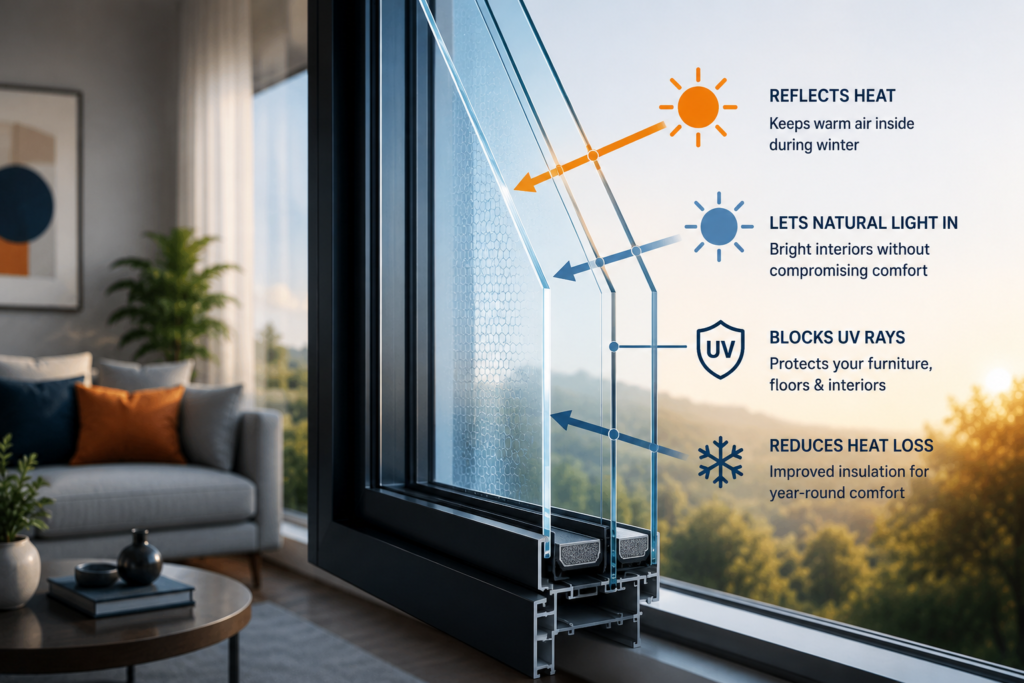
Low-E glass uses advanced coating technology to manage heat without reducing natural light.
Here’s how it works:
This intelligent balance helps maintain a comfortable indoor temperature year-round.
Low-E glass offers more than improved insulation. From reducing energy bills to protecting your home’s interior, these benefits make it one of the smartest upgrades for modern properties.
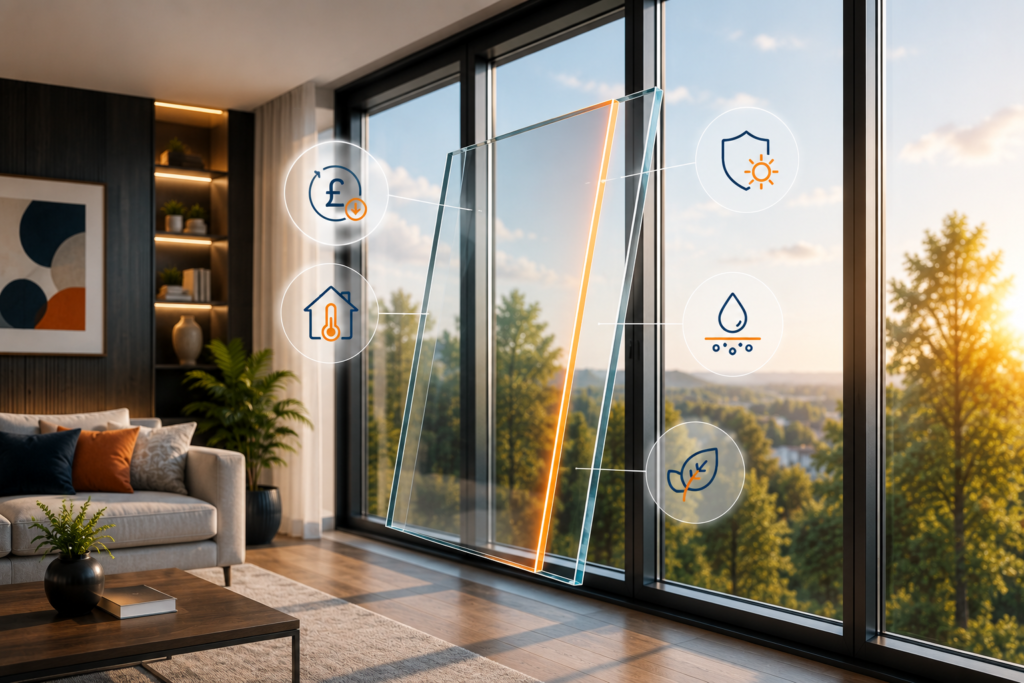
1. Lower Energy Bills
One of the biggest advantages is improved thermal performance.
Because less heat escapes through your windows, your heating system doesn’t need to work as hard, reducing energy consumption throughout the year.
Cold spots near windows become less noticeable, creating a more even indoor temperature. This improved heat distribution helps eliminate drafts and enhances overall thermal comfort. As a result, living spaces feel more consistent and comfortable.
Low-E coatings block a significant amount of harmful UV radiation, helping to protect your interiors from sun damage. This added protection prevents wooden flooring, furniture, curtains, carpets, and artwork from fading over time.
Modern Low-E double glazing helps minimise condensation by keeping the interior glass surface warmer.
Less condensation means fewer moisture-related problems around your windows.
Lower energy consumption also means lower carbon emissions.
Installing energy-efficient glazing contributes to a more sustainable home while reducing your environmental impact.
For most UK homeowners, the answer is yes.
Although Low-E glass typically costs slightly more than standard glazing, the long-term savings often outweigh the initial investment. By improving insulation and reducing energy loss, it helps create a more comfortable home while lowering ongoing energy costs, making it a smart investment for both new installations and replacement windows.
Many homeowners benefit from:
Heat Retention
Low
Excellent
Energy Efficiency
Basic
High
UV Protection
Limited
Excellent
Condensation Control
Standard
Improved
Comfort
Average
Excellent
Long-Term Savings
Low
Low
Low-E glass is suitable for almost every glazing application, including:
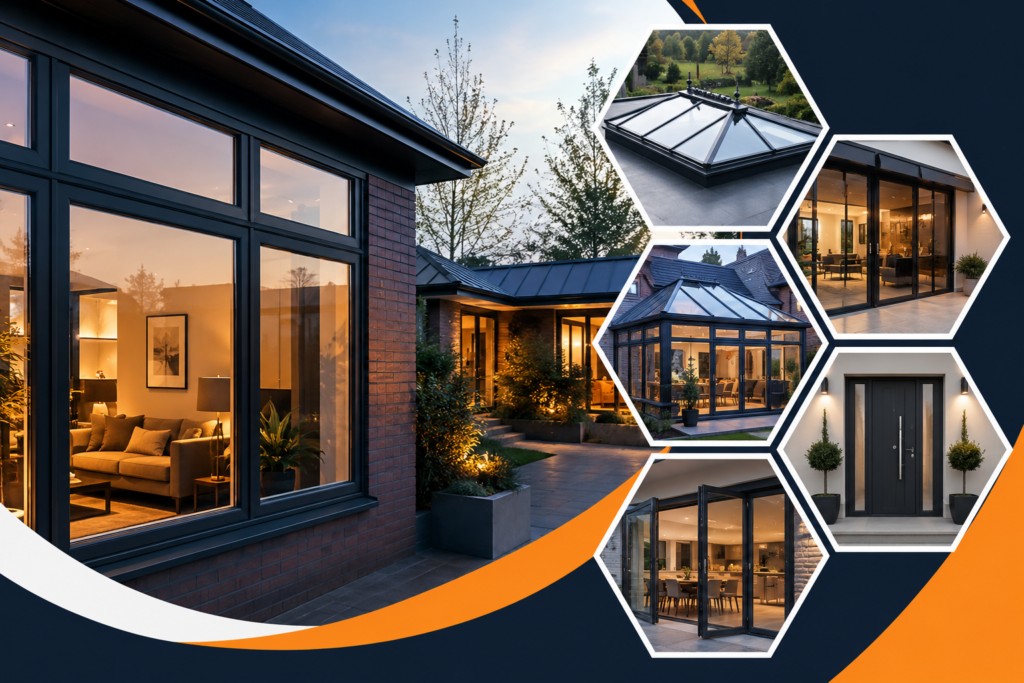
Still wondering whether Low-E glass is the right choice? Here are answers to two of the most common questions homeowners ask before upgrading their glazing.
Low-E coatings are designed to improve thermal performance rather than sound insulation.
However, when combined with high-quality double or triple glazing, homeowners often notice improved acoustic performance.
Yes.
The UK’s changing climate makes Low-E glass particularly effective because it helps retain warmth during colder months while reducing excessive solar heat gain during warmer periods.
It is an excellent solution for homes looking to improve comfort and energy efficiency year-round.
At Nex Glazing, we supply and install premium Low-E glazing solutions tailored to your property’s needs.
Our team provides:
We help homeowners invest in glazing solutions that improve comfort, reduce energy costs, and enhance the value of their property.
Low-E glass is glass coated with a microscopically thin metallic layer that reflects heat while allowing natural light to pass through.
Yes. Although the initial cost is higher than standard glass, the long-term energy savings, improved comfort, and reduced heating bills make it a worthwhile investment.
Yes. It reflects indoor heat back into your home, reducing heat loss through windows.
Yes. It blocks a significant amount of harmful ultraviolet radiation, helping protect furniture, flooring, and fabrics from fading.
Yes. It helps control solar heat gain, keeping interiors cooler while still allowing plenty of natural daylight.
Absolutely. Most modern energy-efficient double-glazed units incorporate Low-E glass to improve thermal performance.
If you’re looking for an effective way to improve your home’s energy efficiency, reduce heating bills, and enjoy greater comfort throughout the year, Low-E glass is a smart investment. Whether you’re replacing old windows or planning a new glazing project, choosing Low-E glass can deliver long-term value, better insulation, and a more sustainable home.